

All Is Not Calm, But All Is Bright

Happy little boy at Christmas with a Santa hat on holding candy canes

I saw this quote on a Christmas card sent to me from a family I work with and boy did it stick with me.

The holidays are challenging enough for adults to process through. Add on a child who is out of routine, dealing with the unknown, bombarded by sensory experiences, but expected to be calm.

Do you ever wonder why your child acts up during the holidays?

Does your child turn into The Grinch during the holidays… causing havoc everywhere they step? For most, being out of a routine is challenging, which is usually what occurs during the holiday season. School is out, there is a lack of structure, meal times aren’t a frequent, sugar is consumed more and there are many new experiences occurring.

Despite this being typical for most, there are some children who just aren’t able to process the out-of-sync feeling as well.

Now no judgement to you parents! You have a lot going on too. Preparing for the holidays is overwhelming. I want to encourage you to read these next top tips, and see how you can implement them to support your entire family.

Top suggestions for a calm & bright holiday.

1 – Flexibility is key

It is important to understand that the plans you have in your head for your child… might be too much for them. Understanding their limits, their trigger/challenges, and how far past their threshold they can go is key. You might have to leave an event early.

You might have to say no to multiple events in one day. Too many unknowns in a week might cause your child to become upset, or overwhelmed. The changes in their environment and how it could bombard their sensory system should be at the forefront of awareness for a family.

2 – Maintain a schedule

Keeping a schedule, or a simple routine can help your child immensely to have the capacity to adapt to events or other changes in the schedule. Making sure they have enough rest before, and after events will allow their systems to reset. Eating meals around the typical times, and making sure there is enough filling food on their plates. All of this will allow them to accept changes in their routine with more ease.

3 – Build in an exit strategy

During events if you are seeing the beginning signs of overwhelm, it might be time to say your goodbyes. Making sure you and your family knows what signs to look for. You can have a keyword that your family knows it is time to pack up, and fast.

4 – Prep your child

Most children will be more calm if you provide then with the expectations. Have a chat with your child about the events leading up to the large event, activities happening during the event, and even if there are specific expectations for them during the event would be best.

Imagine if you got invited to a party, but wasn’t sure what type of party. It could be a birthday party, a Halloween party, or even a wedding. You wouldn’t know what to wear, what to bring, how long the event would last for or what was expected from you. This is how your child feels.

5 – Encourage calming activities

I’ll always encourage calming strategies leading up to, during, and after events. It can take no more than 5 minutes out of your schedule, but have such a positive impact on the outcome of attending large events. Knowing which strategies work for your child is key.

I always suggest a big movement action, paired with a small focused one. Thing like animal walks, jumping games, or crashing activities are are large movements that provide calming input into the whole body. Small focused movements like blowing out pretend candles, blowing bubbles, or different finger movements for focused attention are great to re-center.

I hope these strategies provide you and your family with some relief to enter into some large holiday events with some peace of mind. If you are finding these events, or even smaller ones, to be more and more challenging and you aren’t sure how to help your child reach out! I loved to find out if more individualized suggestions might be needed.

Samantha Stiles, MS, OTR/L 

CEO, Occupational Therapist

As a pediatric therapist I know what it takes to really address feeding, sensory, and emotional challenges in children. I’m talking the kind of exponential growth that changes the course of lives. But this type of transformation requires time, parent involvement, and extra guidance.

When parents arrive inside the world of Empower Kids Therapy, they find a fresh spark of hope, a different way of thinking, and a sense of being understood.

Free Consultation
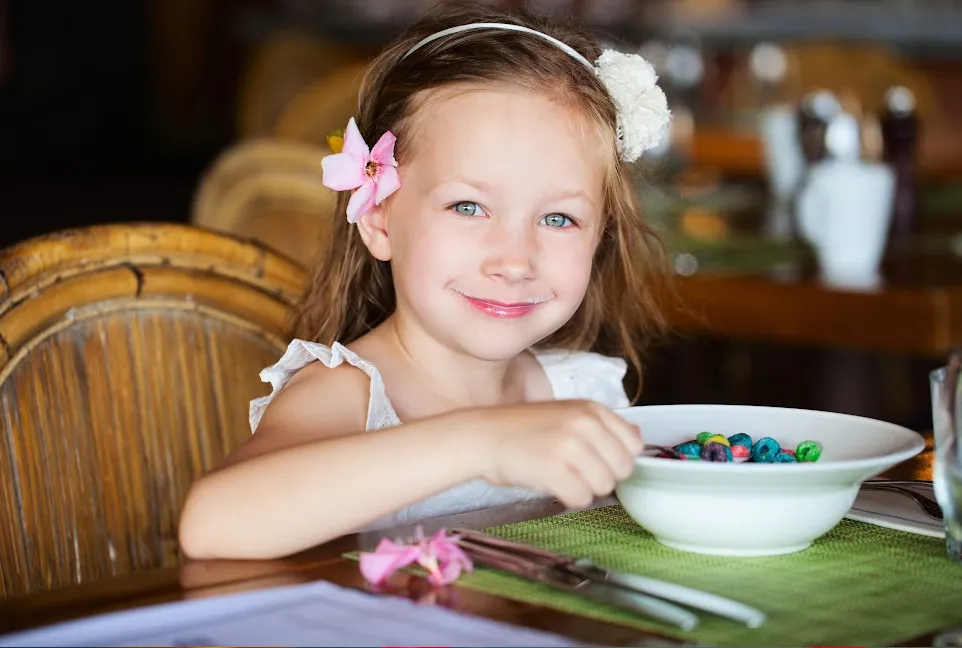
little girl eating a bowl of something at the table

Does your picky eater make mealtime stressful?

Get your FREE Mealtime Success Guide!

The Empower Kids Therapy approach combines sensory experiences matched with proven therapy strategies to provide a safe, fun, and explorative mealtime.

737 Posts
1.8K Followers

Ms.Sam | Pediatric Occupational Therapist

Helping little ones grow through in-home sensory support, feeding help, and infant development care.
📍 Orlando, FL

Here’s to 2026, may it be the year your kids sleep, eat something that isn’t beige, and let us drink our coffee while it’s still warm. ✨🙃

We’re heading into the new year feeling grateful, hopeful, and honestly just excited for some good change. New routines, new ideas, and a lot more of the “we’re figuring it out together” energy that makes this community so special.

And since we basically feel like your internet OT friends at this point… we want to know:

What do you want to see from us in 2025?
More sensory hacks?
More feeding help?
More mom humor to keep us all alive?
More activities to keep your toddler from climbing the walls?

Tell us in the comments, we genuinely use your ideas.

Here’s to a calmer, funnier, more predictable year (manifesting ✨). Happy New Year, friends. 🥂💛
New Year’s Eve can be a lot: loud noises, bright flashes, and unpredictable moments that turn into sensory overload fast. If your child struggles with fireworks, here are a few easy, at-home things you can use to help tonight feel calmer:

• Headphones soften the volume and give them control.
• Sunglasses help with bright flashes and reduce visual overwhelm.
• A favorite blanket or hoodie adds deep pressure and comfort.
• Crunchy or chewy snacks give grounding oral input before (and during) fireworks.
• Their comfort item creates familiarity when everything else feels chaotic.

And remember: watching from inside the house, from the car, or skipping fireworks altogether is a perfectly valid option. Your child’s comfort always matters more than the tradition. 🤍✨

If you need quick, sensory-friendly ideas for making tonight easier, just DM us, we’re here for you.
We hope you had the sweetest holiday, and if you’re still celebrating this week, we hope it’s been full of cozy moments and just the right amount of calm. ✨

Here are the activities we shared over break plus today’s, all in one place for you to use whenever your kids need something fun, regulating, or simply different to do. As always, DM us for the instructions and we’ll send everything straight to you.

And if your child has tried any of the Advent Calendar activities, we’d love to see!

Send us your photos or tag us, we’ll be featuring your kiddos’ creations and moments on our stories this week. 🤍✨
Happy Holidays to the families who show up with patience, persistence, and so much love.

We see all the invisible work you do: the preparation, the emotional coaching, the sensory-friendly adjustments, the flexibility, and the advocacy.

Your children are growing in beautiful ways because of the care you pour into them daily.

Today, we hope you get to slow down, savor the little moments, and enjoy the magic in whatever form it arrives.

Thank you for letting us be a part of your child’s journey this year. It’s an honor we hold close.

Wishing you peace, comfort, and a truly joyful holiday. 🎄🤍
Day 3 of our OT Advent Calendar! 🍓✨

Today’s activity is all about building real-life skills in a fun, low-pressure way. When your child slices soft fruit, they’re practicing bilateral coordination, one hand holding steady while the other works the knife, which is the exact foundation they’ll use at mealtimes.

Threading the fruit onto skewers strengthens fine motor precision and hand-eye coordination as they line everything up just right. And if you add a simple pattern to follow, they’re also working on sequencing and visual perception without even realizing it.

Plus, fresh fruit gives tons of tactile sensory input, and presenting it as a “build-your-own skewer” makes exploring new textures a whole lot less intimidating for hesitant eaters.

Want the full Day 3 instructions? DM us “DAY 3.” 🍉✨